Mold Rugby Club

A new clubhouse designed to work beyond matchdays

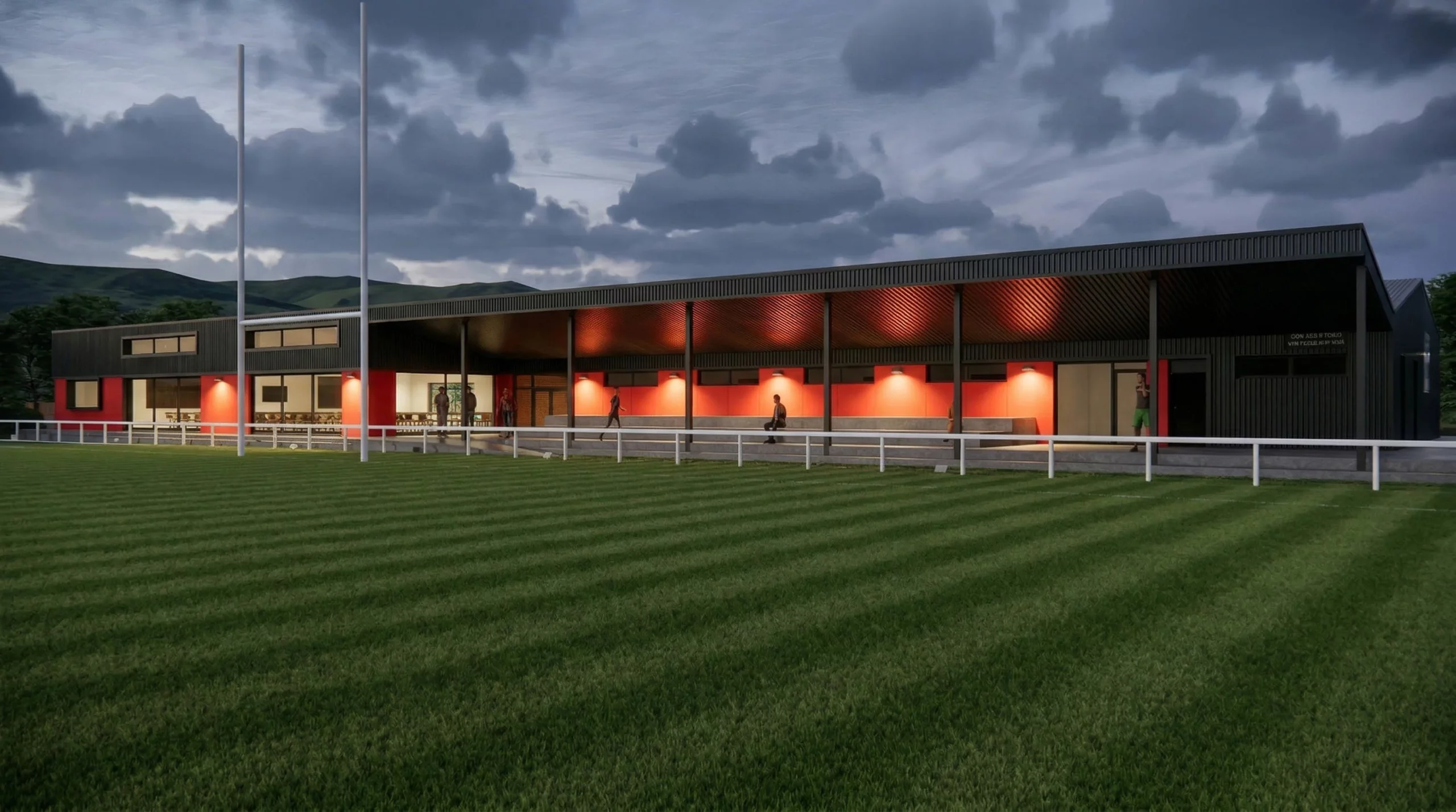
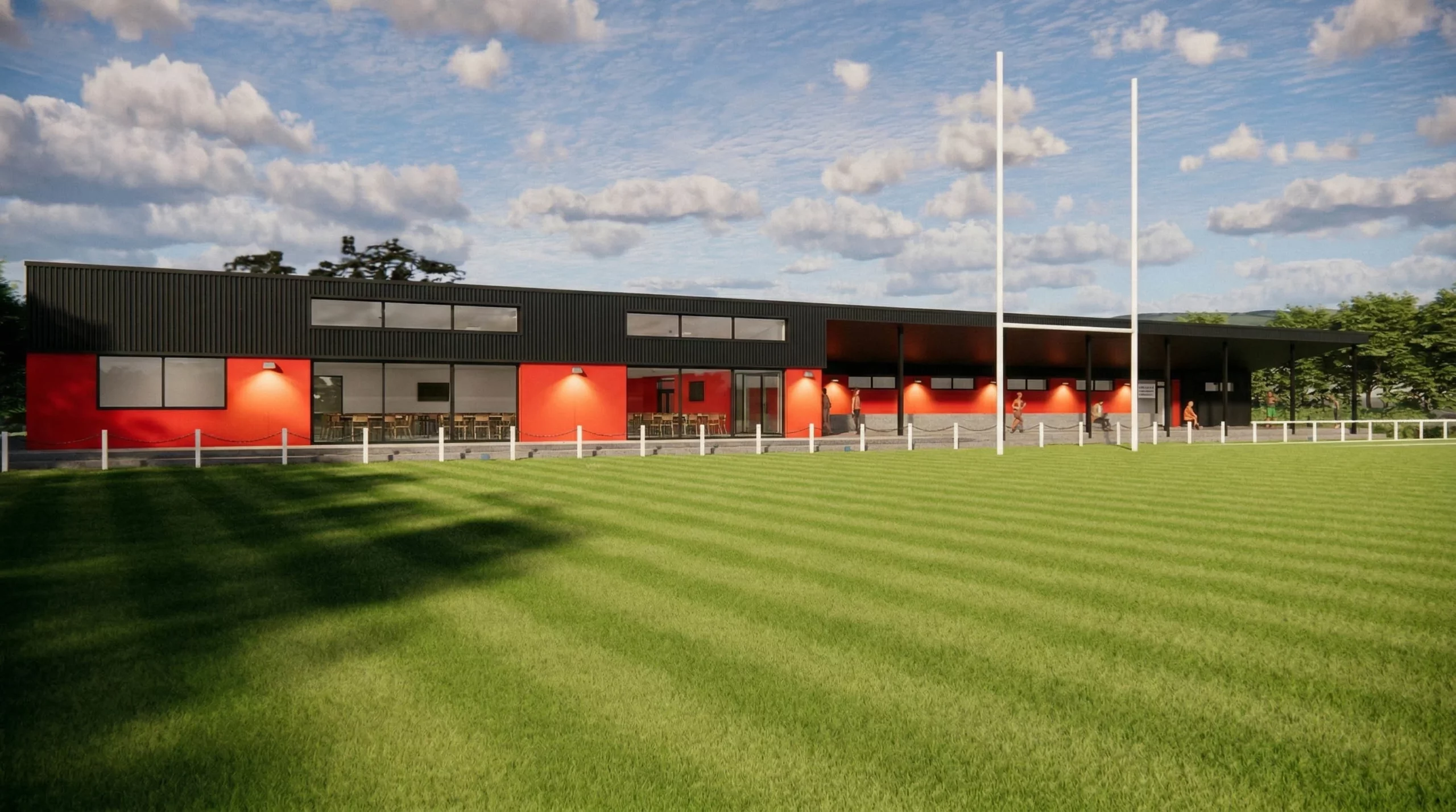
Long low black-and-red sports pavilion with covered terrace, goalposts and striped green playing field in foreground
Mold Rugby Club needed a new building that worked better for the club. Improved changing facilities and a function space would support how the club operates – both on matchdays and as an ongoing source of income.
Client
Mold Rugby Club
Location
North Wales
Status
In progress
Property
Rugby Clubhouse
Scope
New clubhouse
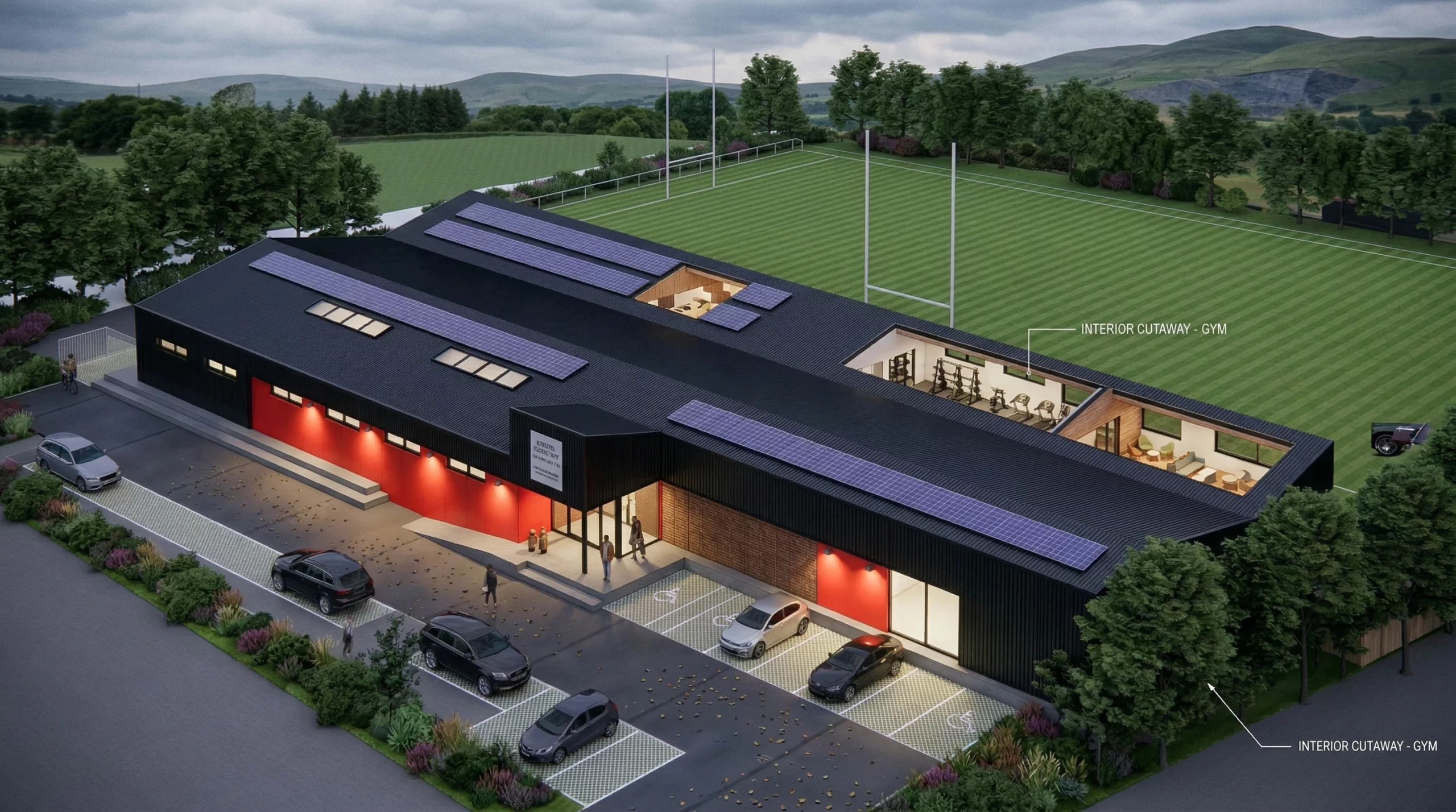
Aerial view of a modern sports centre with solar panels on the roof, parking bays, and a striped rugby pitch beside it.

What mattered

The brief was clear, but the site made it difficult. The existing clubhouse sits within a flood zone, which meant any new building had to be raised significantly to meet flood requirements. That had a direct impact on cost and buildability.

Parking was also a major issue. The site is already under pressure, and match days regularly create conflict with surrounding uses. Any proposal needed to acknowledge that reality, even if it couldn’t fully resolve it.

Funding also played a central role. The function space wasn’t an add-on; it’s key to making the project viable, giving the club a way to generate income beyond matchdays.

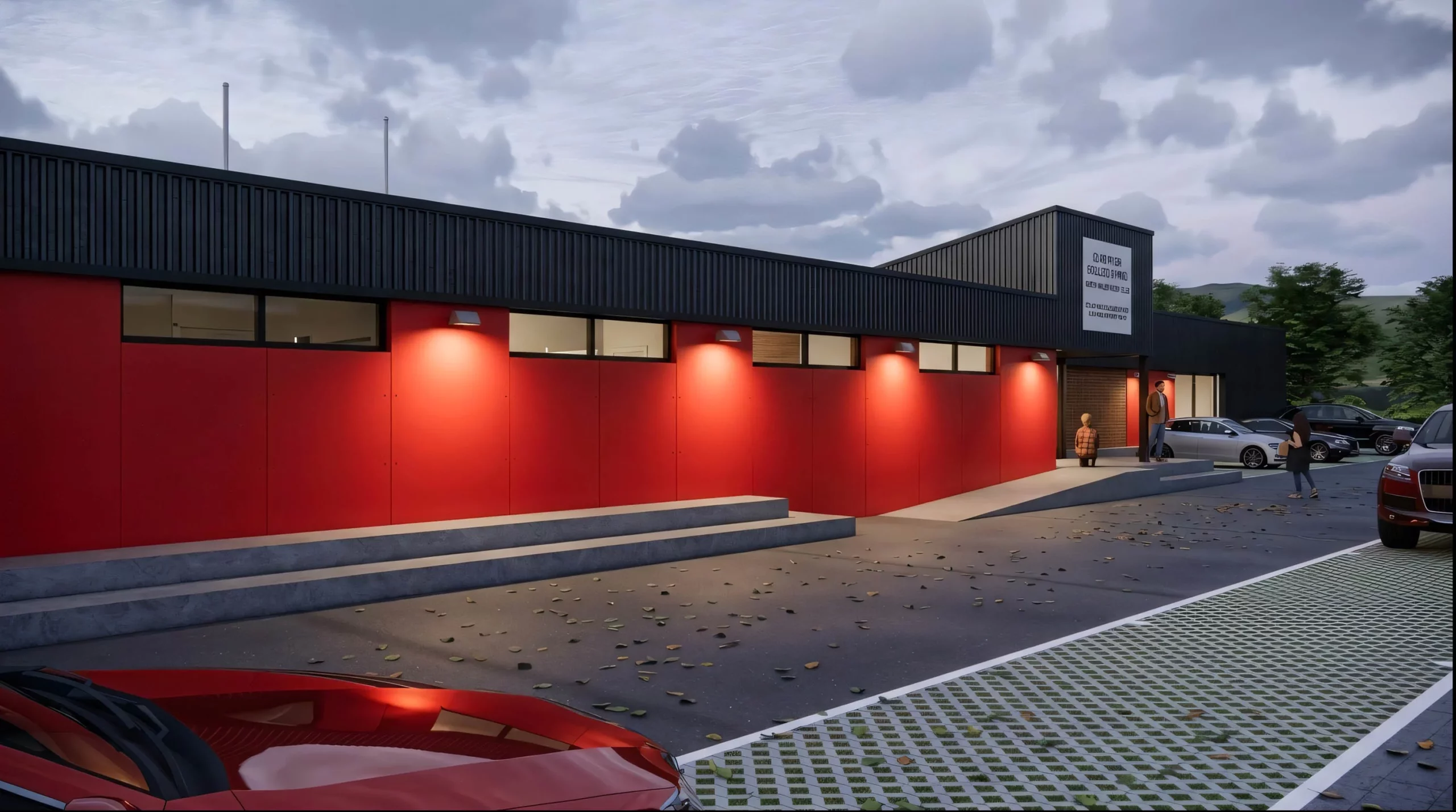
Low modern building with red panels and wall lights, steps leading to entrance, parked cars and people outside at dusk
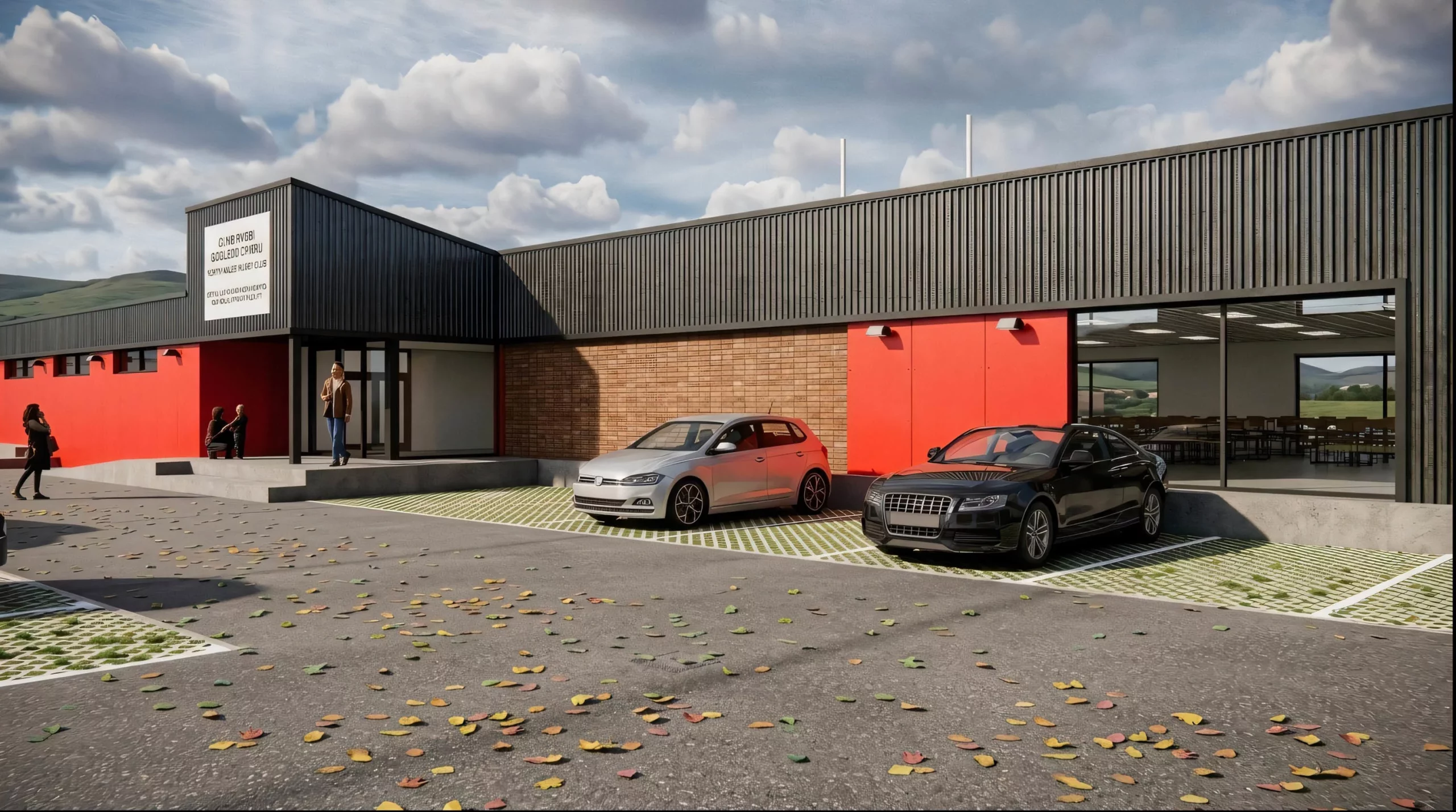
Modern single-storey community building with black cladding, red accents, parked cars and people by the entrance on a leafy day

Our approach

The design follows a straightforward principle: replace the building with something that works harder. A two-storey solution allowed the required accommodation to be stacked efficiently, keeping the footprint tight while meeting the brief. The building is lifted to address flood risk, with the structure and levels designed around that requirement from the outset.

Modern black-and-red sports pavilion with covered spectator seating lit by warm wall lights beside a striped grass field

Internally, the layout separates matchday and social functions, allowing both to operate independently. Changing facilities are arranged for easy use, while the function space is positioned to take advantage of views and natural light.

We tested a number of iterations through the design process, adjusting the scheme in response to cost, planning and site limitations.

The outcome