Building Regulation & Construction Drawings
Once planning is sorted, the next step is producing the drawings that allow the project to be built.
Technical drawings set out how everything actually goes together – structure, insulation, drainage, levels, fire safety. They’re the information your builder works from and what Building Control review for compliance.
Without this stage, nothing moves forward. We prepare technical drawings for projects across Chester, North Wales and the wider North West.
What this stage covers
At this point, the focus shifts from how the building looks to how it performs and how it’s constructed.
The aim is simple: remove guesswork before work starts on site..
- Define wall, floor and roof build-ups
- Coordinate structural elements
- Ensure insulation and energy performance meet current standards
- Resolve drainage, levels and regulatory requirements
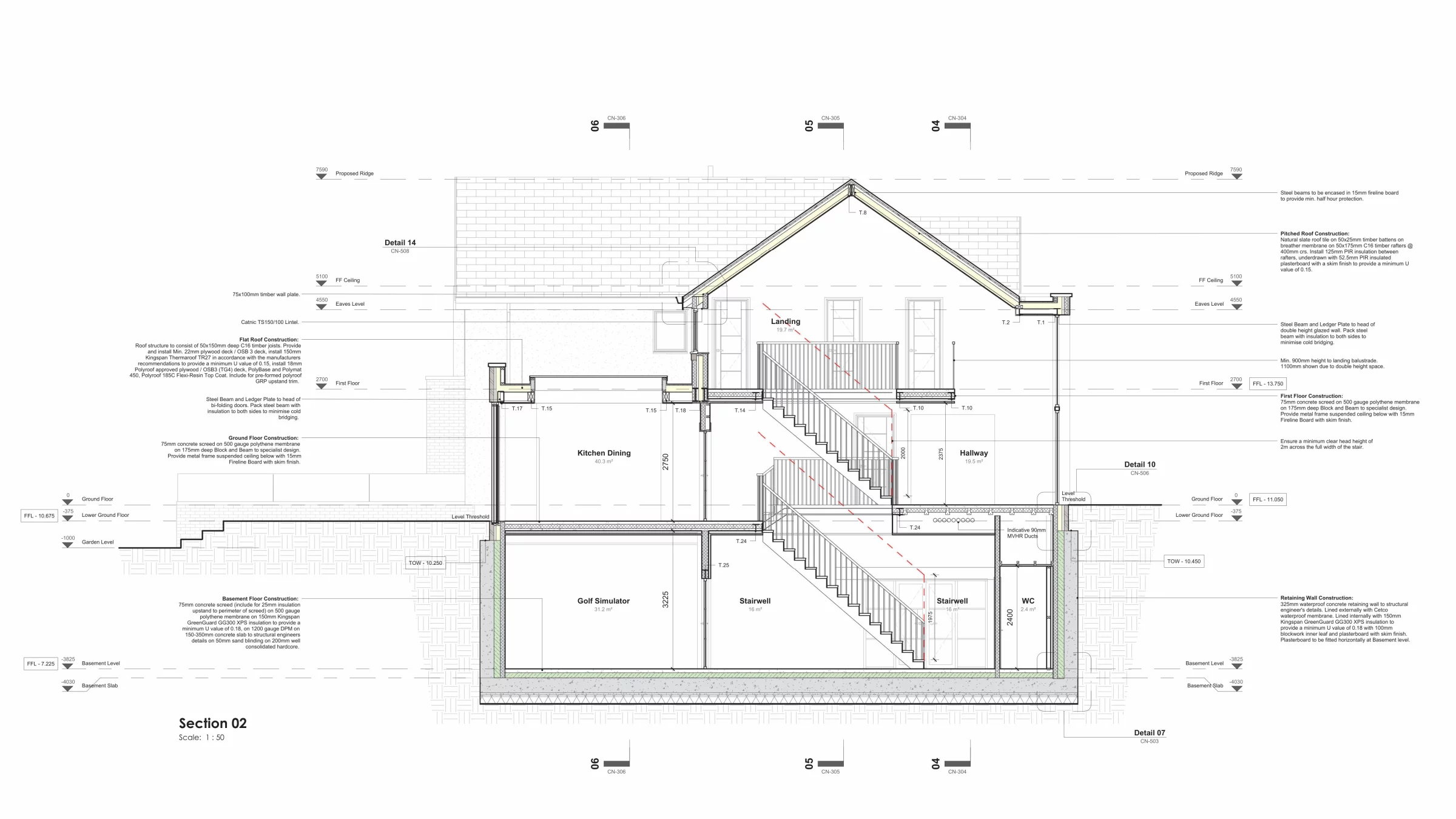
Building regulation drawings
Building Regulation drawings are the minimum amount of technical information you need to get a project built.
They’re submitted to Building Control and deal with compliance: structure, insulation, fire safety, drainage and so on.
For smaller jobs, like extensions and straightforward new builds, that can be enough. Particularly if you already have a builder lined up and the project isn’t overly complicated. They get you through Building Control and allow work to start.
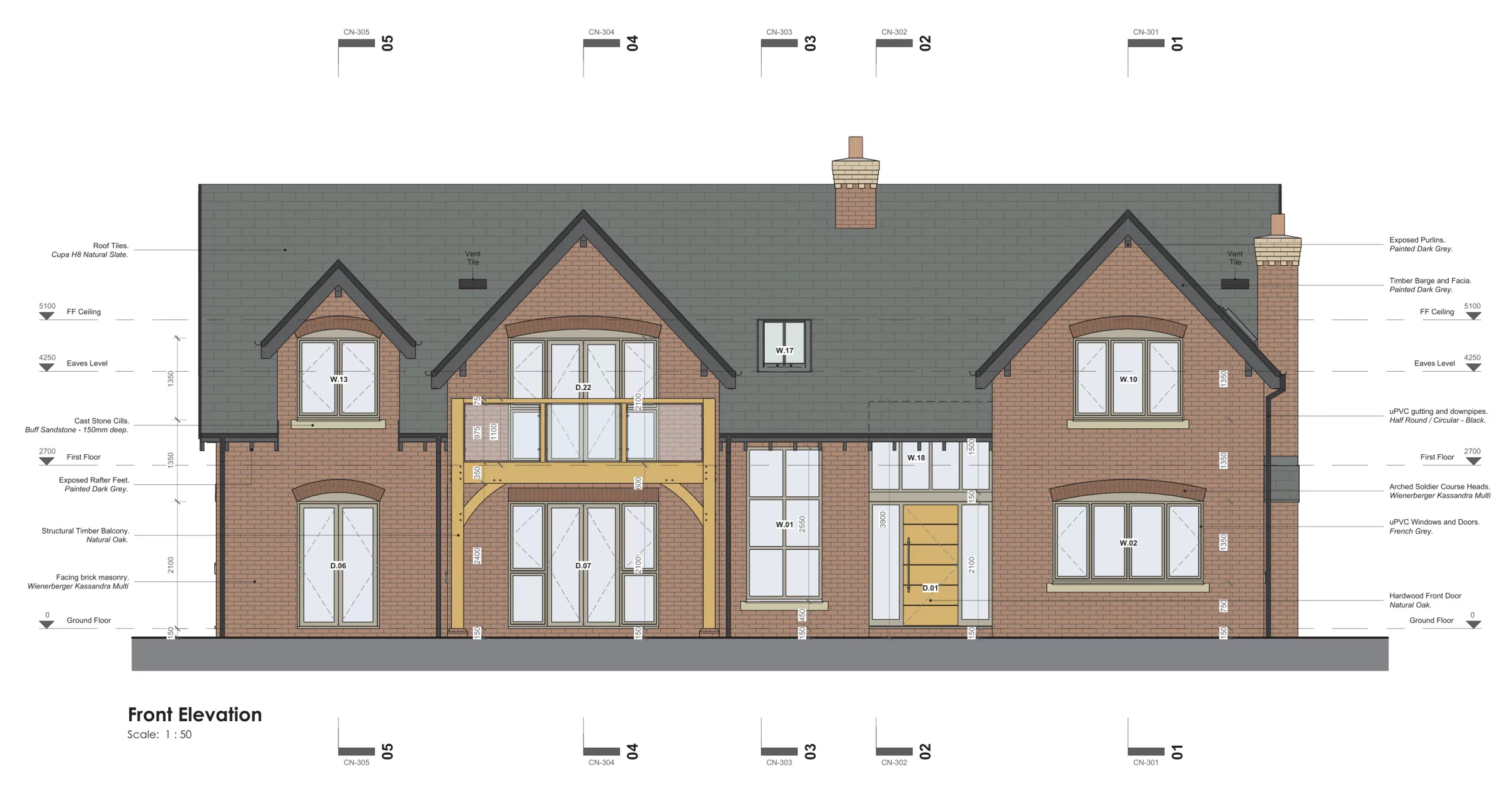
Construction drawings
Construction drawings are essentially an uplift on building regulations drawings.
They build on the Building Regulation set and go into more detail. Junctions are worked through properly. Materials are specified. Structural elements are coordinated clearly.
It removes grey areas.
You can’t produce construction drawings without first completing the Building Regulation stage. It’s sequential.
If we’re involved in tendering or acting as architect during construction, we’ll recommend a full construction package. We’ve seen what happens when details are left open, and it usually ends up costing more later.
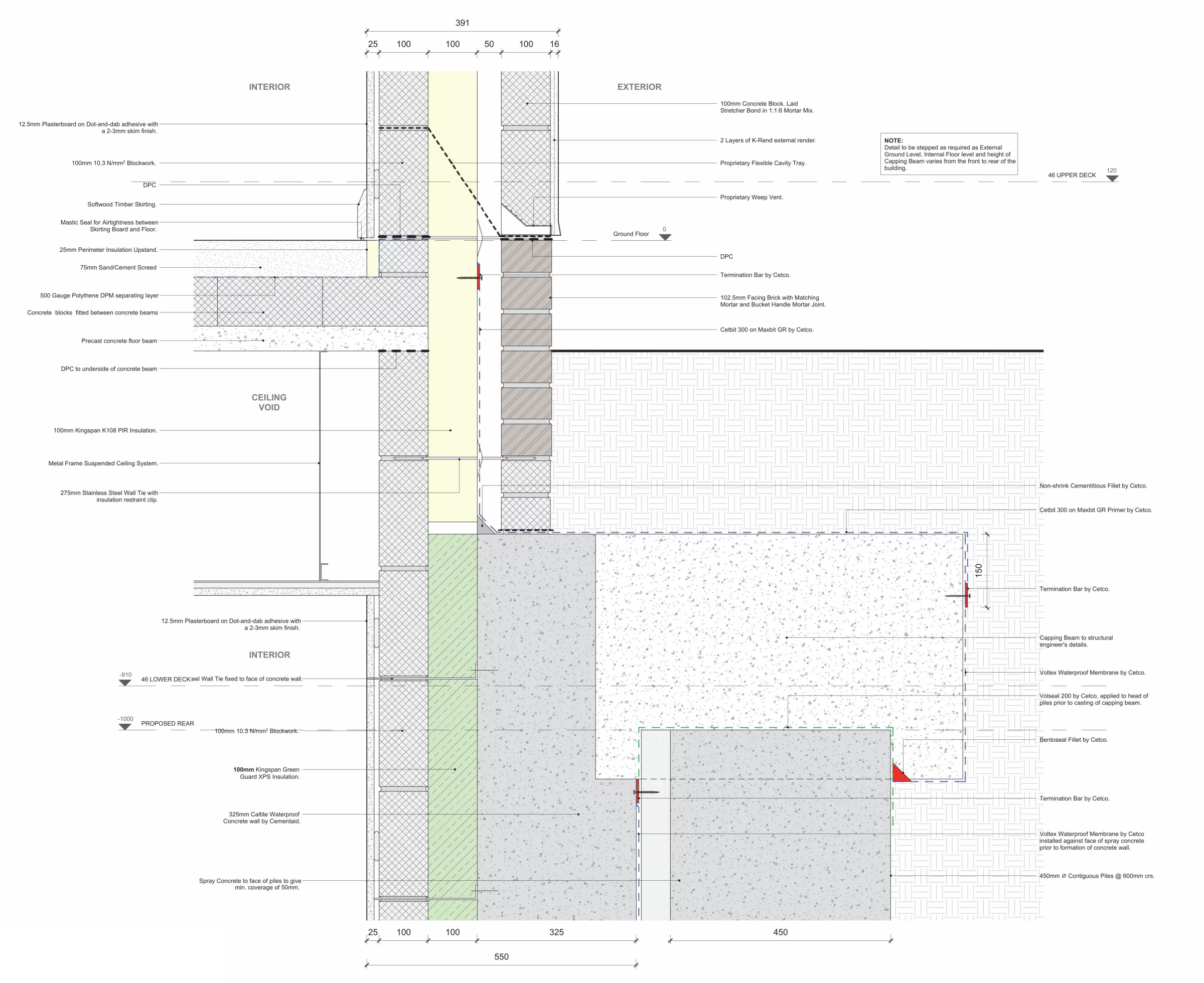
Resolving the design before construction
Coordination
At this stage, we’re also coordinating with structural engineers and other consultants. We want to make sure everything lines up before it gets to site.
Sorting something out on paper is a lot simpler than sorting it out once it’s been built.
When this stage applies
You’ll need technical drawings once planning is approved and you’re preparing to build.
If the project requires Building Control approval (which most do), this stage is necessary. It’s also required if you’re looking to obtain accurate contractor pricing.
If you’re unsure which level of detail is appropriate, we can advise based on the size and complexity of the project.

Planning permission already in place?
We can review your scheme and advise on the appropriate level of detail.