Master Planning & Feasibility Studies
A feasibility study or master planning exercise is about understanding that early on, before a lot of time or money is committed.
Not every site is suitable for development, and not every idea is viable.
If you’re assessing land or considering a development opportunity, this stage establishes what’s realistically possible before any formal application is made.
Site feasibility studies
A feasibility study tests what’s achievable on site. That means reviewing planning policy, physical constraints and site context before drawing conclusions.
We look at:
- Relevant local planning policy
- Access and highway considerations
- Neighbouring properties and overlooking
- Site levels and topography
- Existing buildings and constraints
- Services and infrastructure limitations
The purpose is to assess whether development is likely to be supported and what scale is realistic.
For example, a field on the edge of a settlement might appear suitable for housing. In reality, it may sit outside the defined settlement boundary, fall within open countryside policy or have limited highway visibility. The principle of development may be the main issue – not the design.
Equally, a large garden plot within a village may appear straightforward, but neighbouring amenity, access width or drainage capacity can significantly influence what’s achievable.
These are the issues that are tested at feasibility stage. In some cases, the conclusion may be that a proposal is unlikely to gain support in its current form. That’s still useful information. It allows decisions to be made with an understanding of risk.
Master Planning for Residential & Commercial Development
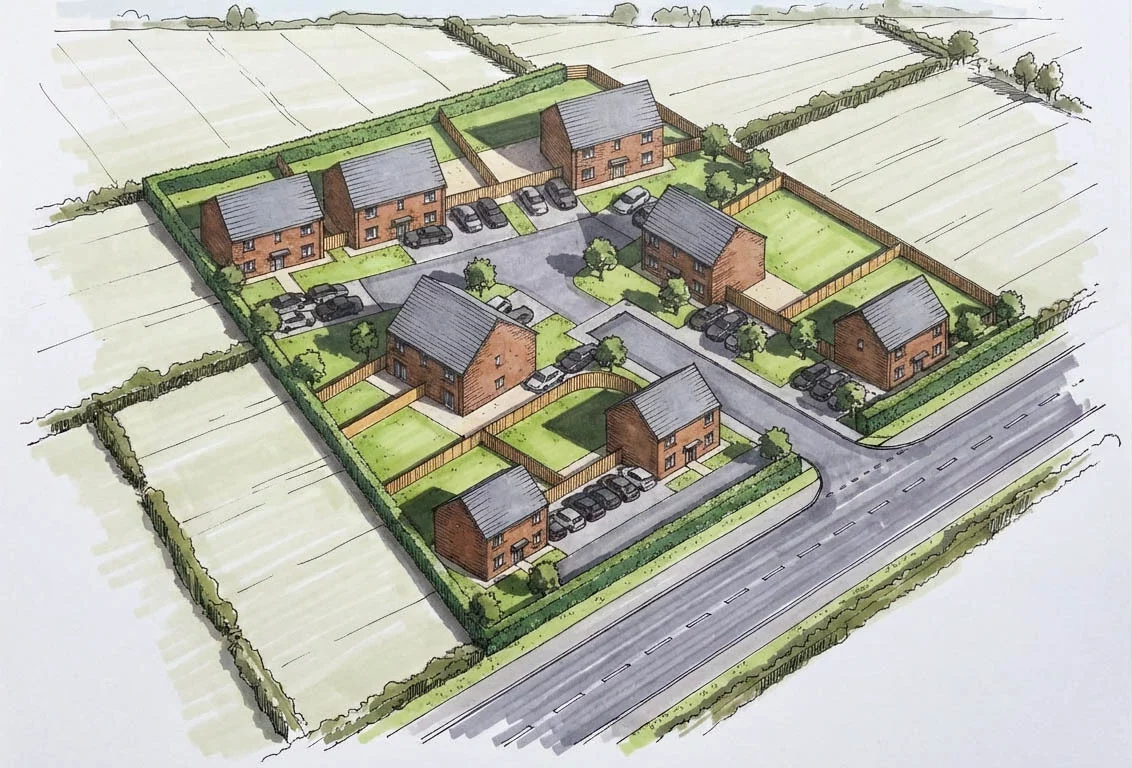
Master planning applies where the site is larger or where multiple units are being considered. Rather than focusing on one building, it looks at how the site works as a whole.
That includes:
- Layout and density
- Access strategy
- Movement through the site
- Relationship to surrounding context
- Phasing where relevant
It establishes a framework for development rather than fixing every detail. That framework can support outline planning applications, phased delivery or long-term land strategy.
For developers, it helps structure a proposal clearly. For landowners, it defines potential before entering into agreements. For private clients with larger plots, it prevents piecemeal decision-making.
Planning policy & risk
There’s not much value in pursuing a planning application without understanding the policy position first.
Feasibility and master planning work requires a realistic view of local authority expectations and precedent. We review planning history, recent decisions and relevant policy documents before reaching conclusions.
Our goal is to assess probability, not overstate opportunity.
When Master Planning is needed
This stage is commonly used when:
- Considering the purchase of land
- Assessing the development potential of an existing site
- Exploring subdivision of a plot
- Testing options prior to a planning application
- Reviewing whether a scheme is commercially viable
It sits before detailed design and often informs whether a project proceeds at all.
Working with D2
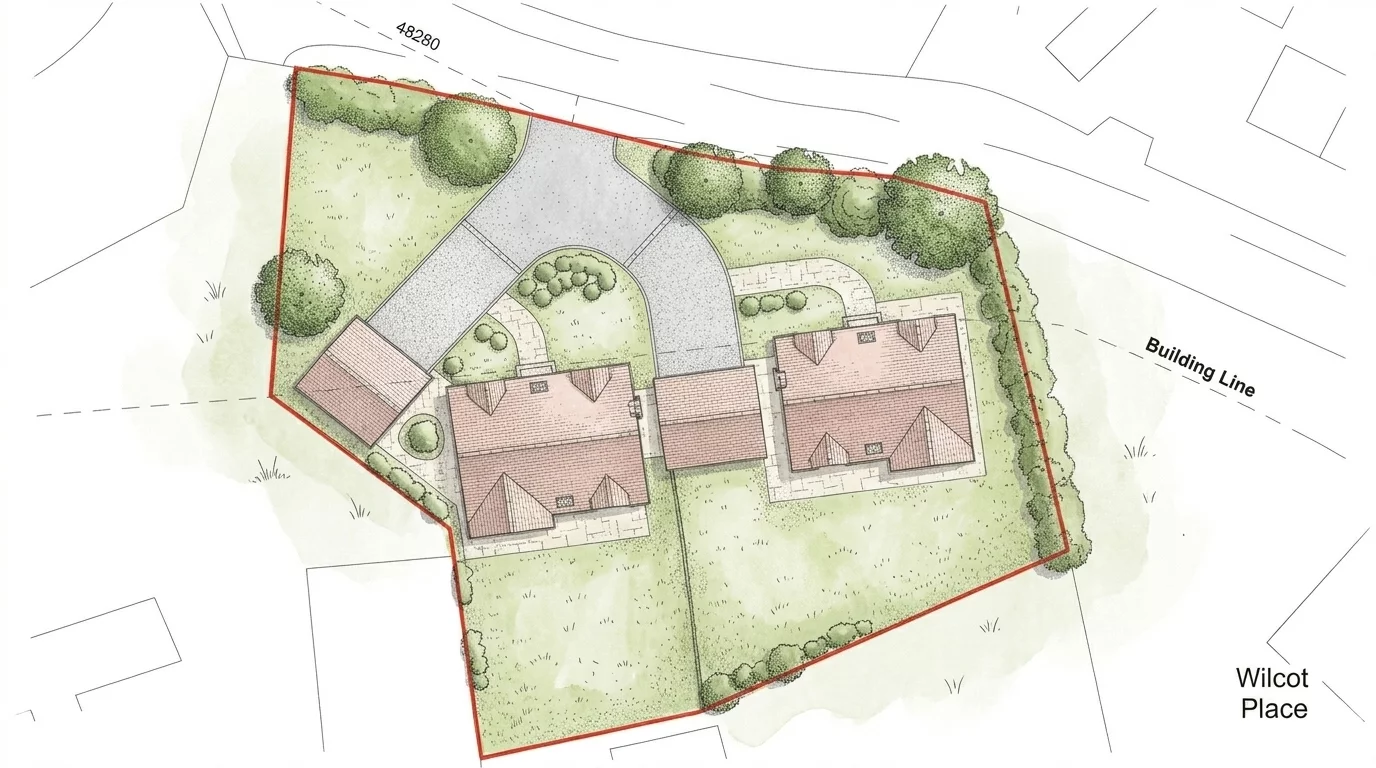
If you’re evaluating a site or considering a development opportunity, we can carry out a feasibility study or prepare a master plan to assess what’s realistic.
It may confirm potential. It may identify constraints. Either way, it provides a structured basis for decision-making before further commitment.