Pwllheli Sport Facility

Combining sport and community in a single facility

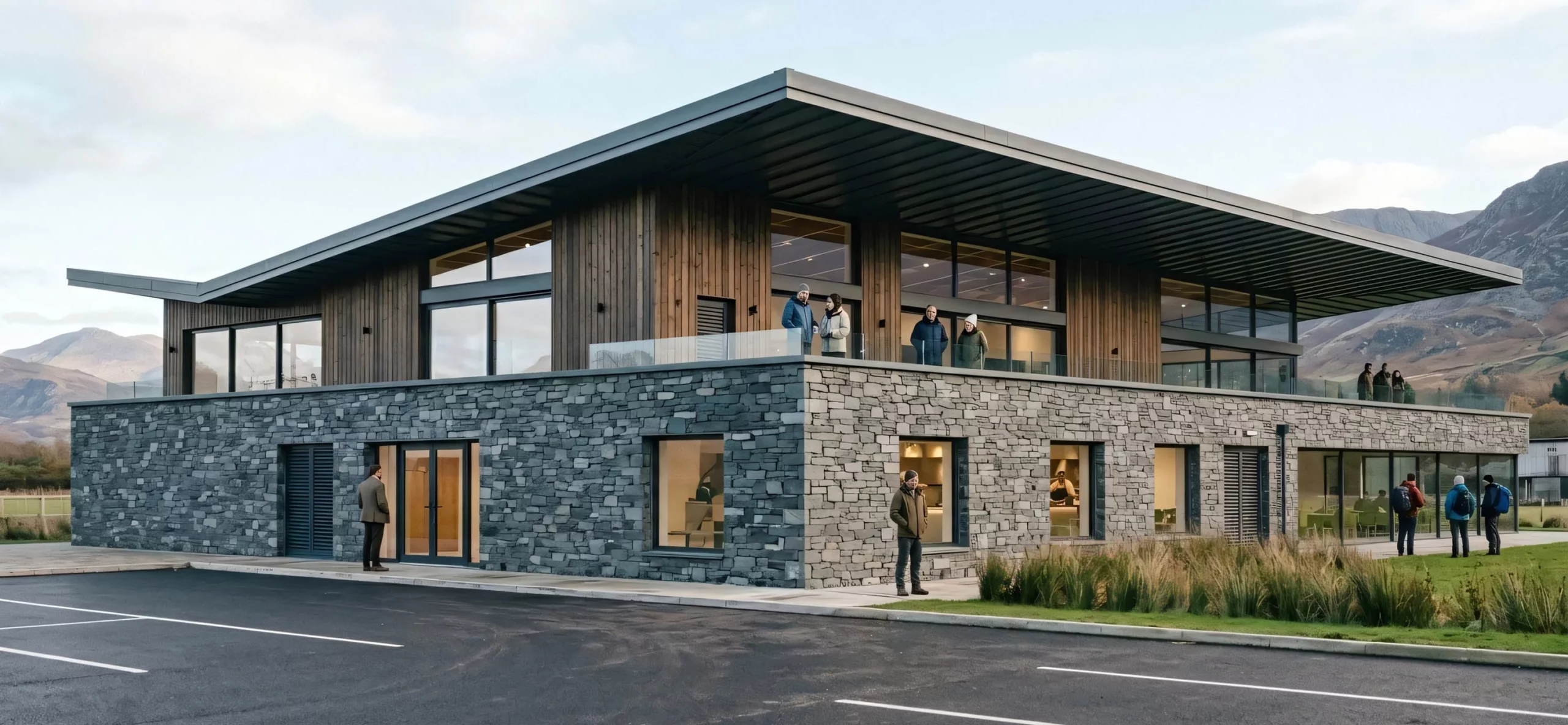
Modern two-storey building with stone lower walls, wood-clad upper level and glass balcony, people on terrace and grounds
This project in Pwllheli explores a new facility that brings together rugby provision with a wider community offer. The aim is to create a building that works not just for the club, but as a shared space for the town.
Client
Pwllheli Rugby Club
Location
North Wales
Status
In progress
Property
Community sports facility
Scope
New facility
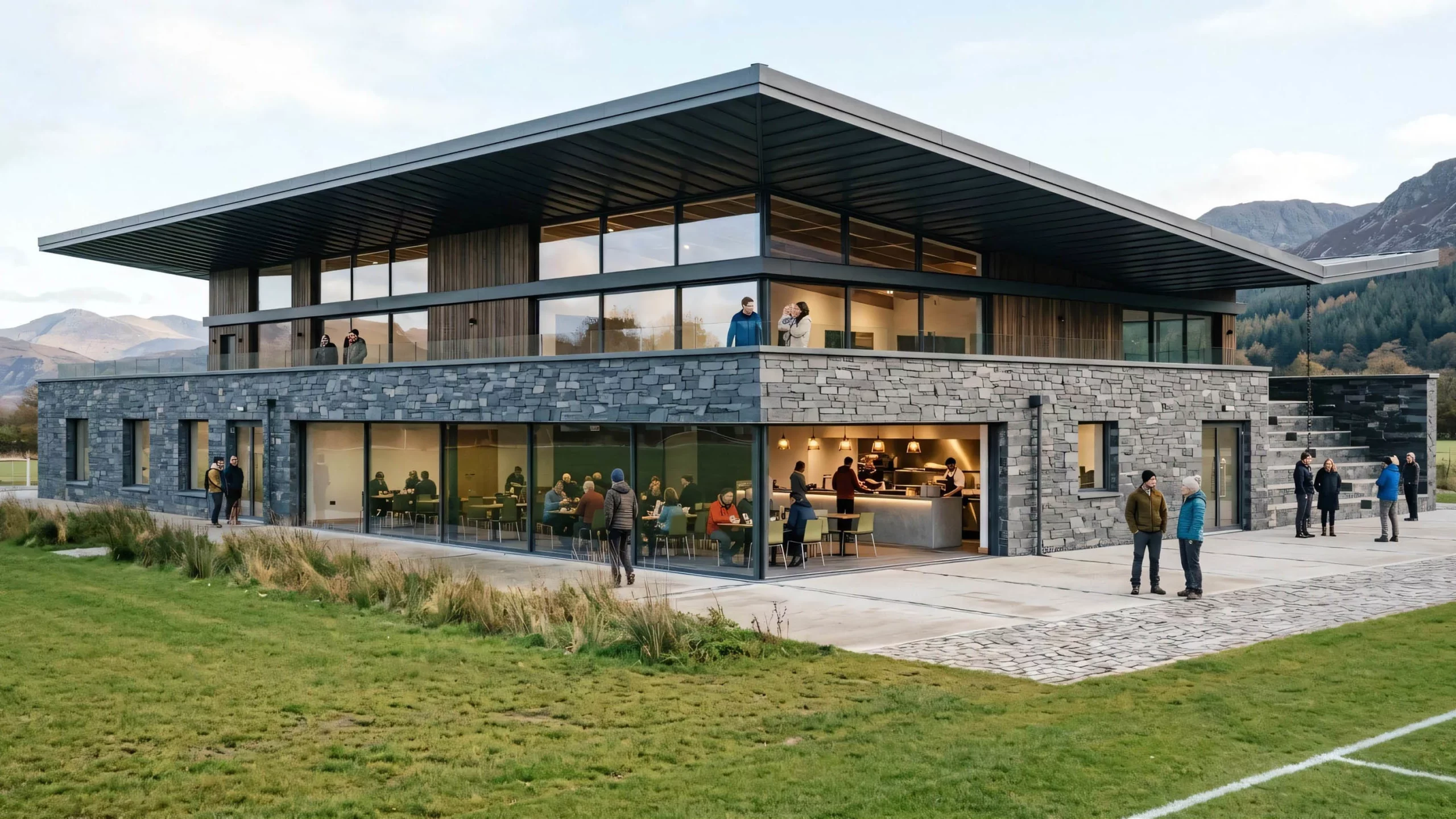
Modern two-storey clubhouse with stone lower walls and large glass windows showing people dining and standing on terrace, set by grassy sports pitch and hills.

What mattered

From the beginning, the ambition was to create a building that could support community use alongside the needs of the rugby club. That shift was important, as it affected how the building would be used and how it could be funded. Introducing community-focused elements opened up opportunities that wouldn’t have been available to a purely sports-led scheme.

At the same time, the project needed to remain practical. It still had to function as a working clubhouse, supporting matchdays and day-to-day use without compromise.

The number of stakeholders also added complexity. Input from the rugby club, governing bodies and wider community groups meant decisions needed to be carefully managed and clearly communicated.
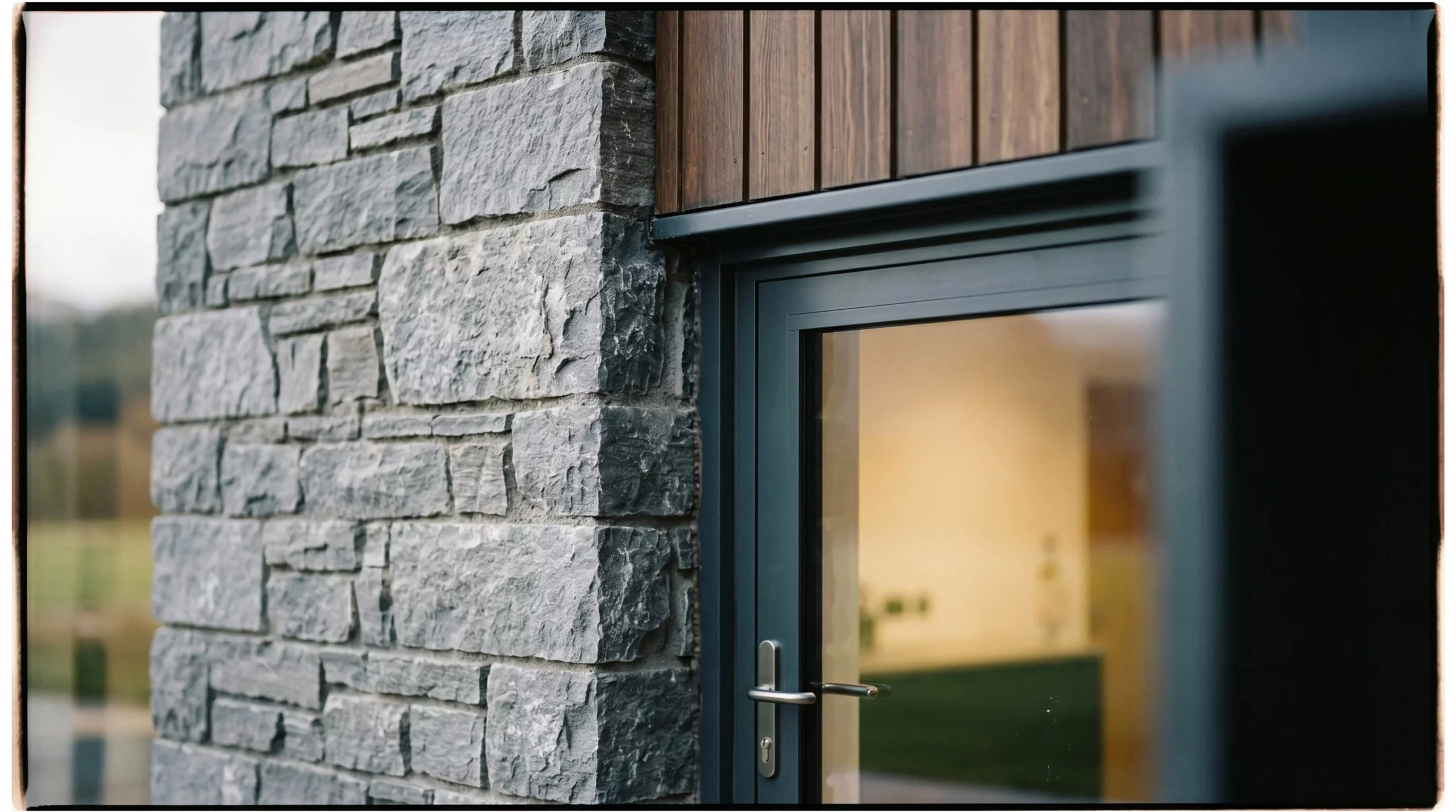
Corner of a stone-clad modern building with a dark metal-framed glass door and wood cladding above.

Our approach

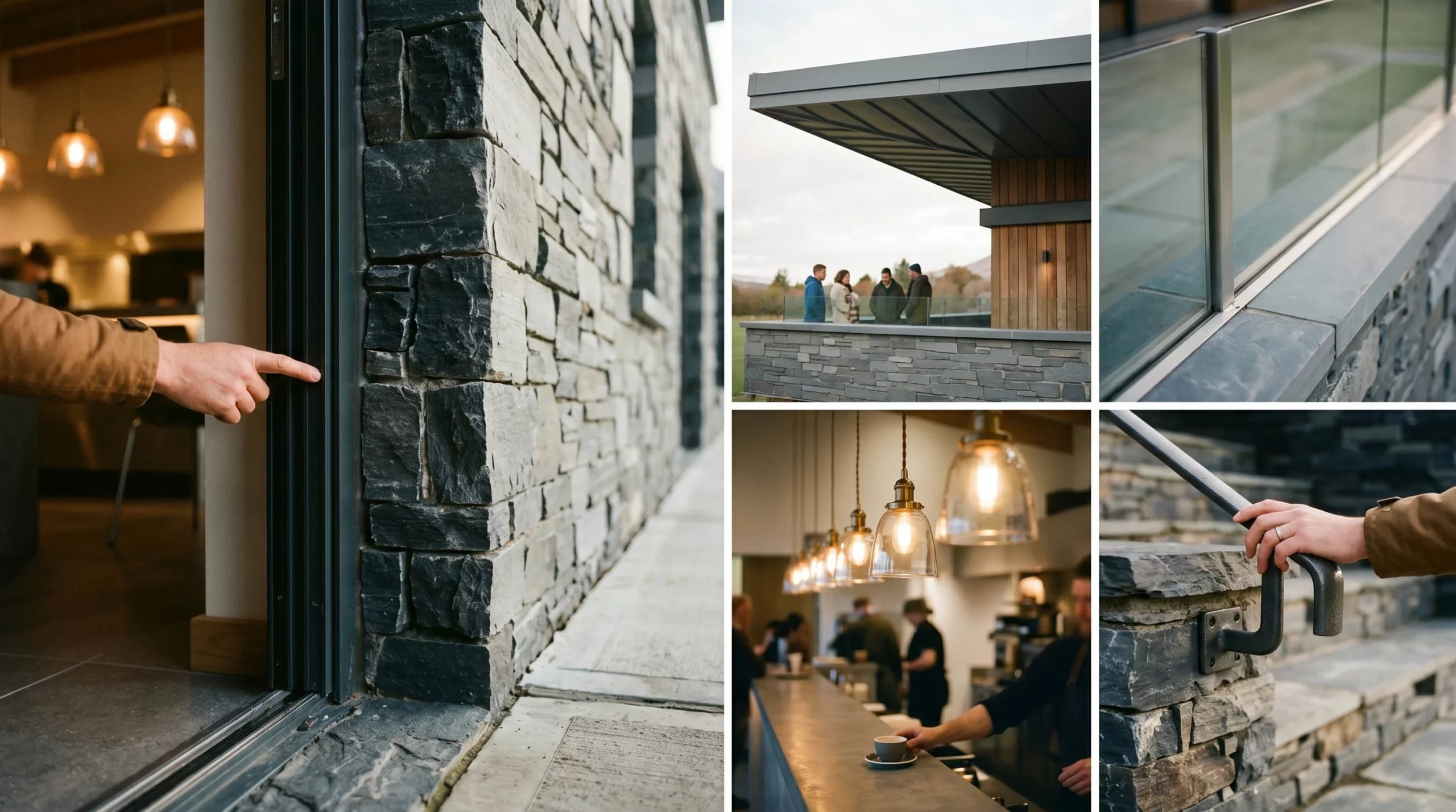
The design brings together sports and community uses within a single building. Alongside core rugby facilities, the proposal introduces spaces that can support a wider range of uses. This includes informal meeting areas, café-style spaces, and rooms that can be used by local groups or as safe, accessible environments for vulnerable users.

Collage showing stone-clad building, glass balcony, pendant lights over a café counter and hands on a door and railing.

Flexibility was key. Spaces were designed to adapt depending on how the building is being used, allowing it to operate differently throughout the day and across the week.

The project was developed through a series of workshops and ongoing discussions with stakeholders. This made sure the design responded to a range of needs rather than a single brief. Our approach also helped align the project with potential funding routes, keeping the design grounded in what could realistically be delivered.

The outcome