Ruthin Rugby Club

A Phased Approach to Extending a Rugby Clubhouse

Ruthin Rugby Club began as a feasibility exercise, looking at how the existing clubhouse could be extended and modernised while remaining operational.

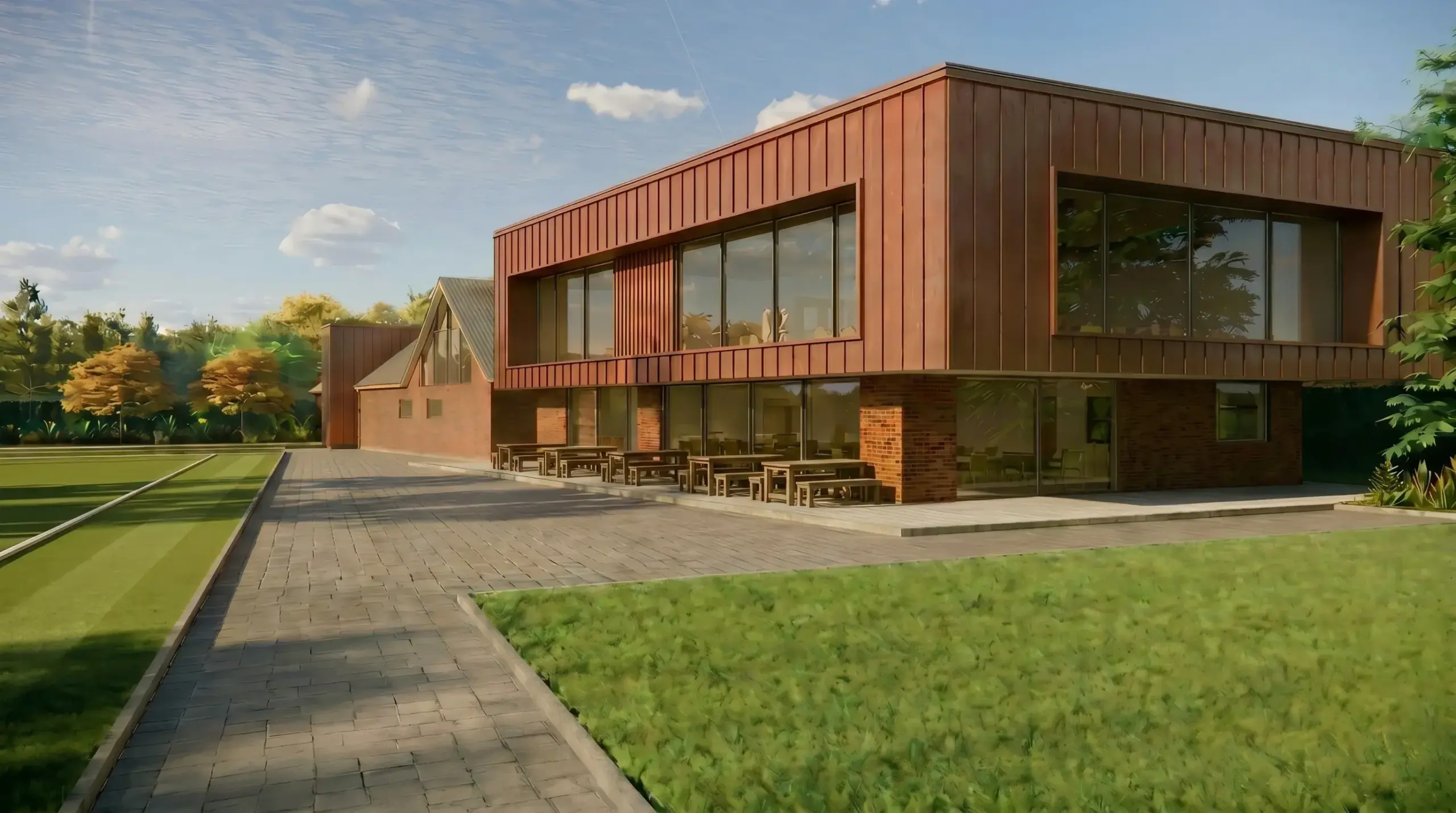
The building itself was relatively straightforward – a single-storey brick structure with limited character. The challenge was how to improve it in a way that felt more considered, given its setting near Ruthin Castle and within a well-used recreational area.
Client
Ruthin Rugby Club
Location
North Wales
Status
In Progress
Property
Rugby Clubhouse
Scope
Extension
refurbishment
phased delivery
What mattered

Early ideas explored a much larger scheme, including function space that could open the building up to wider community use and generate additional income.

Available funding meant the priority had to shift to what the club needed most. That was better changing facilities – particularly to support the growth of the women’s and girls’ teams – rather than expanding into larger commercial spaces.

There was also a need to think long term. Even if the full scheme couldn’t be delivered immediately, the design needed to allow for future phases without compromising what was built now.

Our approach

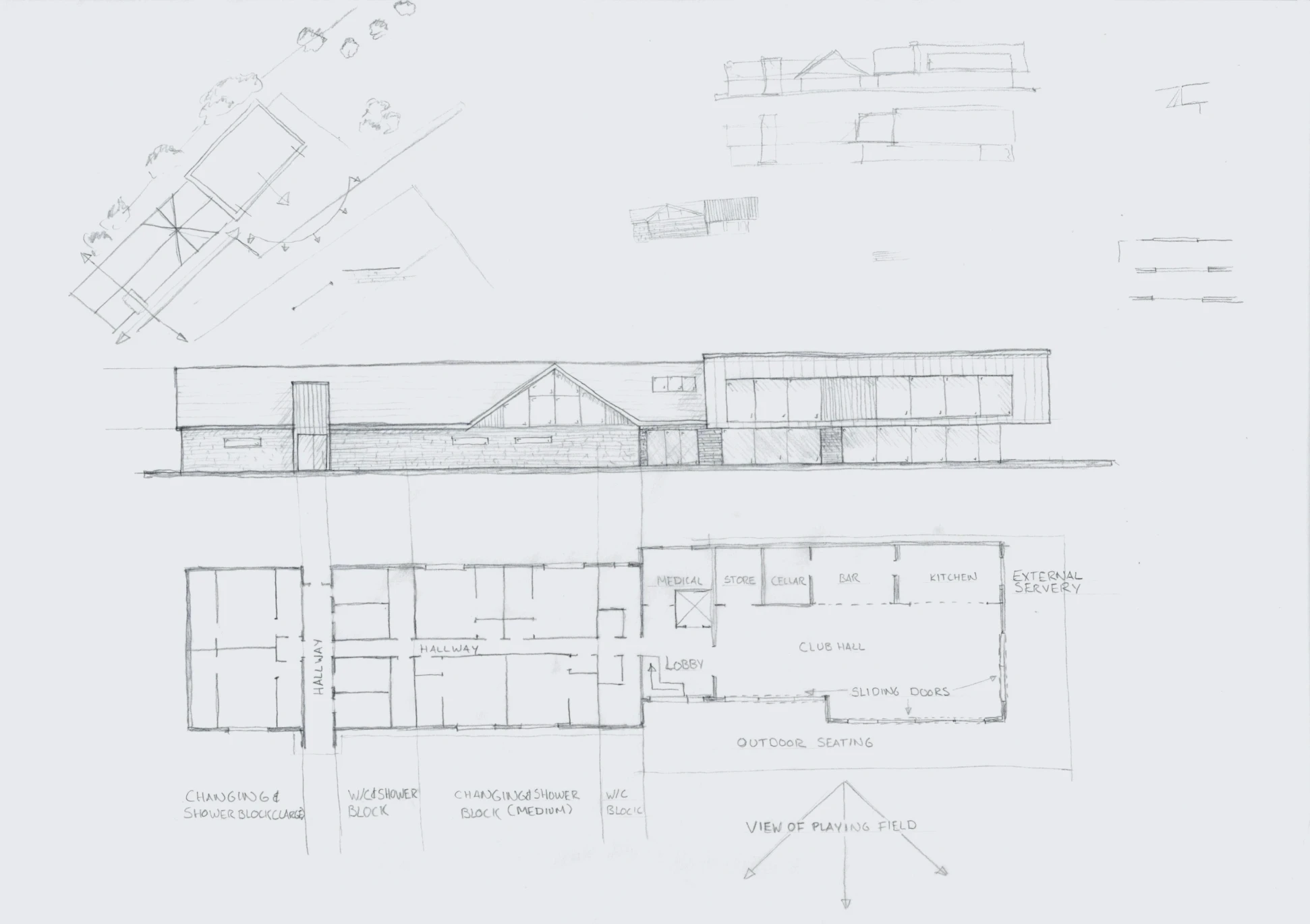
The scheme was structured in phases, allowing the club to build in line with the funding they could realistically secure. The first phase focused on new and reconfigured changing facilities. These were laid out to provide better privacy and more appropriate provision for both male and female teams, addressing one of the key limitations of the existing building.

Flexibility was built into the design wherever possible. Spaces were planned so they could serve more than one purpose – such as changing areas that could also be used for meetings or physio, depending on need.

Within the existing building, parts of the layout were reworked to introduce divisible spaces using acoustic partitions. This allowed a single function room to operate as a larger space when needed, or split into smaller rooms to support different uses at the same time.

Planning was supported by strong local backing and a proposal that responded appropriately to its setting.

The outcome